Meet the moment
On Friday, I met with a bright young man who graduated with a degree in Computer Science 2 years ago.
"When I got into CompSci," he said, "I was really into programming because I liked solving hard problems with code."
"But," he continued, "it feels like I graduated at the wrong time."
The foundations of the entire tech industry shifted underneath him. Employers who'd been eager to hire him during his internship were suddenly "not hiring juniors anymore."
And then there was AI.
"I wish I could have had 3-5 years of experience in the job market before AI came around," he said. "It feels like I missed out on a crucial period of time."
Despite being near the top of his class, he hasn't been able to find a permanent full-time job in tech.
Software development has been a good career for many for at least a decade. During COVID, demand for engineers exploded (as did salaries). But now, because of the economy, AI automation, or both, companies aren't hiring the way they once did.
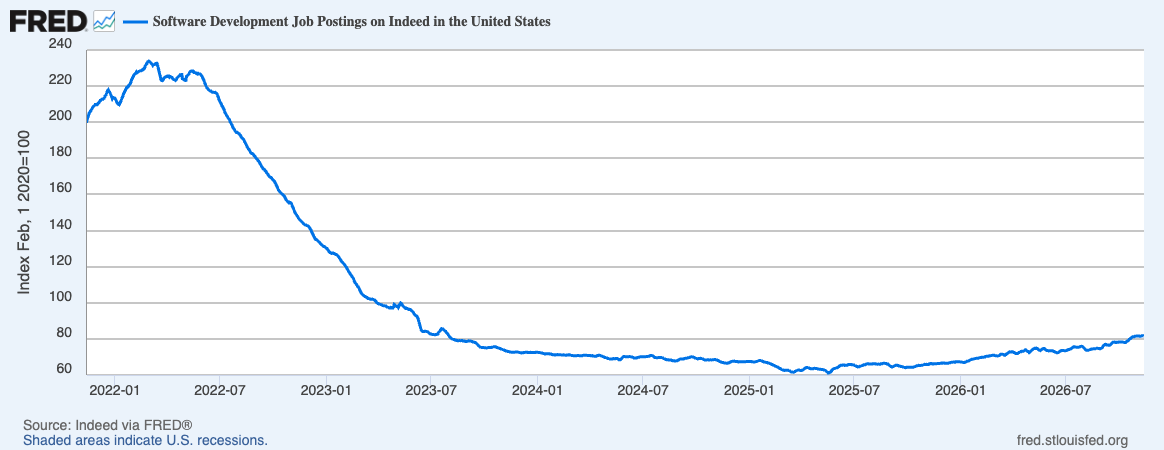
So what's a person to do when the ground shifts underneath them? When what used to be a sure bet becomes a crapshoot?
You have to accept that the world has changed, and evolve.
That goes for all of us: the young grad hoping to land a first gig, and the 30-year veteran who suddenly finds themselves on the chopping block.
Right or wrong, good or bad, there's no going back. We can fight for good public policy by participating in our political system (and we should). But you, personally, need to accept the way things are now.
In The Lord of the Rings, Frodo tells Gandalf he wishes none of this had happened in his time. Gandalf's answer applies to us now: "All we have to decide is what to do with the time that is given us."
(Yes, it's an overused quote. But it fits.)
What can you do?
You accept it, and then you get moving.
That's what this young grad did. He started his own business, offering AI, software development, and automation consulting in his area. It's not the job he originally wanted, but it's the opportunity in front of him.
"I couldn't get a job, so I had to make my own," he said.
That's all any of us can do: dust ourselves off and ask, "What now?"
I can hear people pushing back: "But we can't all become self-employed entrepreneurs!" Maybe not. But that's not the question. The question is, "What can you do?"
I'm not saying you have to become an entrepreneur. I'm saying you have to do something. Your options might not be easy (retrain, go into a different field, work for a smaller company), but you have to do something.
I wish they'd taught me in college that most of the good opportunities are hidden. They require extra work and inventiveness.
Two things have worked for me.
First, relationships beat cold pitches. Building the right connections takes creativity, discomfort, and persistence, but it's always paid off.
Second, put your thinking out in public. For me, that's meant writing, podcasting, and speaking. As my friend Jeremy Enns says, "If you want people to hire you for your expertise, put your expertise on display."
This is the suggestion I gave the young grad: put together an "AI for small business" talk and pitch it to his local Chamber of Commerce. Giving that talk will build trust with a bunch of potential clients and show them that he has the skills to help them.
This time could be your time.
There's a wave of opportunity right now that didn't exist six months ago. But it won't come to you. You have to ride out to meet the moment.
Cheers,
Justin Jackson
Connect with me on:
🦋 Bluesky
💼 LinkedIn
🐘 Mastodon
🧵 Threads