Replying to @joshua_hornby
@joshua_hornby NPR also tried to release it’s standard (RAD) but it never really took off:
https://rad.npr.org/dotorg/analytics/
⟳ 0
♡ 0
Replying to @joshua_hornby
@joshua_hornby There is an industry standard (IAB) that most podcast hosts follow.
There’s als a new open standard, Podcast Index:
https://podcastindex.org/
⟳ 0
♡ 0
@brhea Awwww yeaaaaah! What a beauty.
⟳ 0
♡ 0
Replying to @JamesCridland
⟳ 0
♡ 1
Replying to @docksOFFICIAL
⟳ 0
♡ 1
Replying to @evoterra
⟳ 0
♡ 1
Replying to @JamesCridland
@JamesCridland @Podnews @benedictevans @matt @HighFiveRPG @terzi_federico Great piece! Fascinating to see the “behind the scenes” of the newsletter. Well done! 🙌
⟳ 0
♡ 3
Replying to @sujanpatel
@sujanpatel Nice! Where’d you go?
⟳ 0
♡ 0
⟳ 0
♡ 0
@harriskenny @earnestcapital @tylertringas Thanks for coming on and participating!
⟳ 0
♡ 3
RT
RT
@tylertringas: Gonna discuss indie shutting down and future of VC alternatives. Not totally sure what I think so hop in with questions o…
⟳ 0
♡ 0
⟳ 1
♡ 8
Replying to @jmckinven
⟳ 0
♡ 0
Replying to @jmckinven
⟳ 0
♡ 1
Replying to @joshuaanderton
@joshuaanderton @upscribe Daaaaaamn. Lookin' fine! 🔥
⟳ 0
♡ 3
RT
RT
@swissmiss: I keep coming back to
@johnmaeda's 4 Rules:
1. don’t speak ill of others
2. avoid passive aggressive behavior
3. listen br…
⟳ 0
♡ 0
Replying to @lesley_pizza
⟳ 0
♡ 4
Replying to @xakpc
@xakpc Yes. A genuine interest in what you're pursuing is a prerequisite too.
But genuine interest without market demand won't work.
⟳ 0
♡ 1
Replying to @javavvitch
@javavvitch ☀️ good morning!
⟳ 0
♡ 1
RT
RT
@mijustin: There's a big difference between baking a cake you think people might want, and baking a cake you see people buying and eatin…
⟳ 0
♡ 0
Replying to @IndieHackers
@IndieHackers "Stripe payment disputed as fraudulent"
⟳ 1
♡ 36
Replying to @earthlingworks
@earthlingworks I'm just over here focused on earning USD.
⟳ 0
♡ 11
Replying to @Mr_DannySingh
⟳ 0
♡ 0
Replying to @coreyhainesco
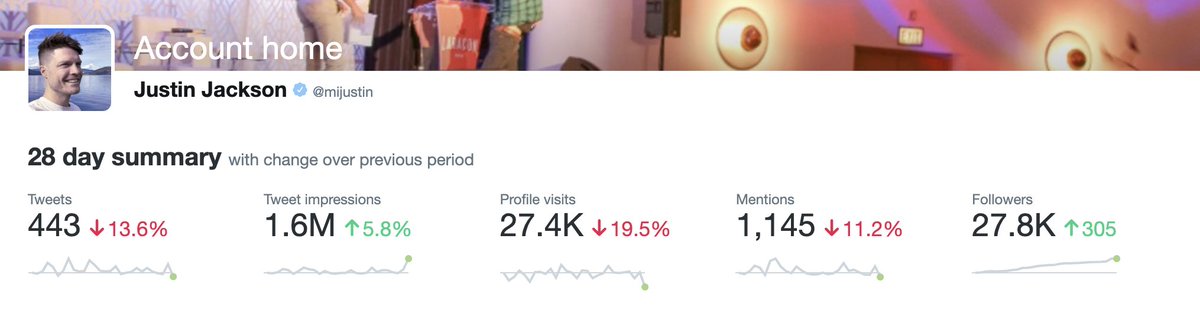
@coreyhainesco I also have my Twitter stats public on
@dr's Ilo tool:
https://ilo.so/mijustin/
⟳ 0
♡ 5
Replying to @ericnormand
⟳ 0
♡ 0
Replying to @DaronSpence
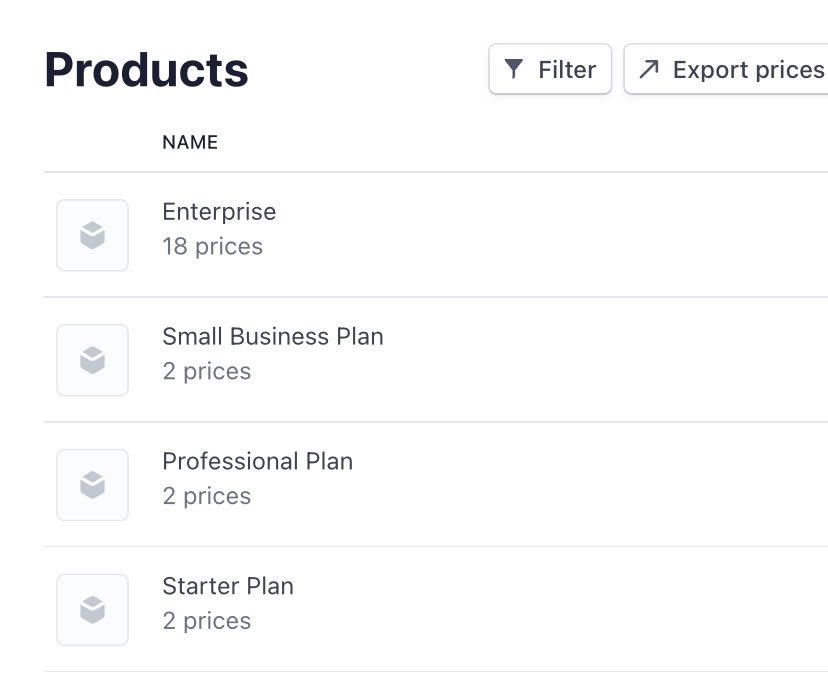
@DaronSpence @stripe @r00k @derrickreimer @jonbuda We’ve just preconfigured a bunch of prices there: $$399, $1,999, $2,999, which we manually add features to in the web app. 😄
⟳ 0
♡ 1
RT
RT
@bryanl: I often find myself in a position where I don’t know what to do next. This is normal. In basketball, you dribble, shoot free th…
⟳ 0
♡ 0
Replying to @DaronSpence
@DaronSpence @stripe @r00k @derrickreimer This is how we have ours configured. We create a whole new product object.
⟳ 0
♡ 0
Replying to @SteveSaretsky
@SteveSaretsky Still Langley (single-detached) mostly driving this trend?
⟳ 0
♡ 0
Replying to @jessewldn
@jessewldn @viamirror When you buy an NFT do you also get the intellectual property rights?
For example, if I bought the Nyan Cat GIF, do I also get to print t-shirts, posters, stickers with it?
⟳ 0
♡ 0
Replying to @mijustin
Anyway, I think this kind of questioning is helpful.
In the science community, they regularly re-examine old ideas, challenge their beliefs, and stress-test theories.
We need this in bootstrapping too!
It's good to look critically at our axioms and ask if they're still useful.
⟳ 0
♡ 5
Replying to @tnorthcutt
@tnorthcutt @mariepoulin hahaha. omg.
my wife would also like to be a guest on this show because she has a two-letter description for me as well. 😜
⟳ 0
♡ 2
RT
RT
@mijustin: Here are some reasonable questions to ask, which never really get addressed by "Long, slow, SaaS ramp of death."
- How long…
⟳ 0
♡ 0
Replying to @tenlinesofcode
@tenlinesofcode @zackgilbert @mariepoulin Yes. And that nuance is largely missing from the "Slow ramp of death" talk.
How slow is too slow?
How many years is too many?
☝️ how do these answers change depending on my goal for the business?
⟳ 0
♡ 2
Replying to @mariepoulin
@mariepoulin Lol.
It's both an impossible question, and a necessary question.
Because humans want to know: "Am I on the right path?"
In SaaS, it's a reasonable question: "Does my business have the right fundamentals to achieve the scale that I want?"
⟳ 0
♡ 1
Replying to @mariepoulin
@mariepoulin Yes! And, it's really difficult to quantify what's normal in bootstrapping. 😅
Difficult to measure what's most common for people starting SaaS.
(and even more difficult to know if we should including "everybody whoever starts a SaaS" in our sample).
⟳ 0
♡ 0
Replying to @mijustin
Here are some reasonable questions to ask, which never really get addressed by "Long, slow, SaaS ramp of death."
- How long are we talking about? 5 years? 10 years?
- How slow is too slow?
- If scale needed is small, how is ramp affected?
- How do you know when you should quit?
⟳ 1
♡ 1
Replying to @mijustin
Good point by Tyler here as well: the danger, these days, is "if you don't see a fast-ish ramp, the odds of success go way down."
https://twitter.com/tylertringas/status/1366502084321964037
⟳ 0
♡ 2
Replying to @mijustin
Also
@ianlandsman:
"At the time, this idea ('long slow SaaS ramp') was especially helpful for founders who had previously sold installable software, where you get the revenue up-front. We weren't used to revenue taking so long to scale."
⟳ 0
♡ 2
Replying to @mijustin
Good point by
@ianlandsman:
"When that talk came out, this was a new idea ('building a subscription business takes time to ramp up'). These days, it's a given. Most founders know that if you start at $30 in MRR, it's going to take a while to hit scale."
💯
⟳ 0
♡ 5
Replying to @mariepoulin
@mariepoulin I agree that there's a ramp for all SaaS.
But what's not clear is:
- "What does reaching scale mean? How is it different for a VC-backed company like CC, vs an indie founder?"
- "How slow is too slow?"
- "How do you know when to quit?"
⟳ 0
♡ 0
RT
⟳ 0
♡ 0
Replying to @ianlandsman
@ianlandsman The part I'm objecting to is that it's always going to be a "long and slow" ramp.
The fact that it's a ramp is definitely true.
I'd put it this way:
"Your revenue needs to ramp up to profitability. That shouldn't take too long, or you'll end up broke or burnt out."
⟳ 0
♡ 0
Replying to @ianlandsman
@ianlandsman Ok. But how "long" is too long?
How "slow" is too slow?
When should you quit?
Absent clarification there, it's really a helpful rubric.
There's always a ramp, but some folks get there in 2 months. Others it takes 10+ years. What are we optimizing for?
⟳ 0
♡ 0
Replying to @mijustin
The risk of adopting the "slow ramp of death" mindset is that "the world is full of people with 3-year-old 'side startups;' 99% of which will never work." (Jason Coen)
"Long slow ramp" can't mean "5+ years of trying to hit $10k MRR" for most founders.
https://twitter.com/asmartbear/status/1069939899044847622?s=20
⟳ 1
♡ 4
Replying to @ianlandsman
@ianlandsman What does it mean, practically?
Like, what practical advice should a new founder take away from that talk?
What does "long" mean?
What does "slow" mean?
⟳ 0
♡ 0
Replying to @ianlandsman
@ianlandsman Seems like there's some confusion as to what that talk is actually about.
https://twitter.com/asmartbear/status/1366227315701727242
⟳ 0
♡ 0
Replying to @GeoffTRoberts
@GeoffTRoberts Going to start a Twitter Spaces on this shortly. Want to join?
⟳ 0
♡ 0
Replying to @mijustin
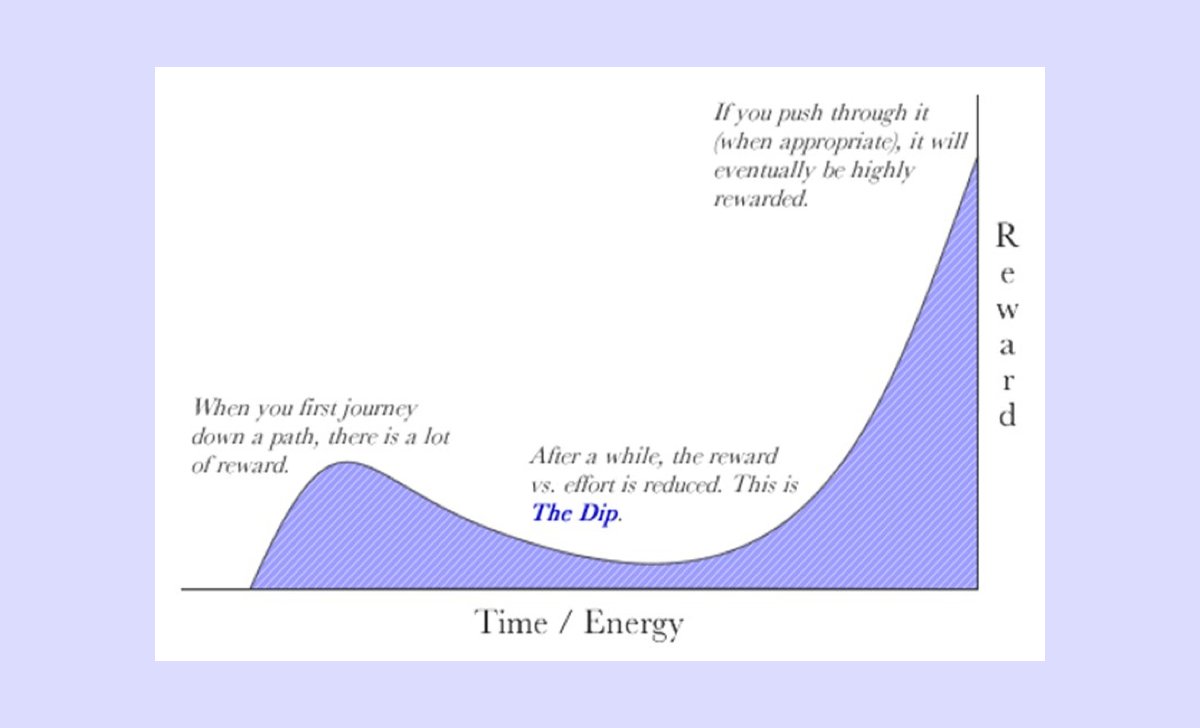
Almost every endeavor will have "the dip," where your initial enthusiasm wears off, and the going gets tough.
It's probably a better rubric for bootstrappers; especially since Godin talks a lot about the importance of quitting.
Not everything is worth a slow slog.
⟳ 0
♡ 9
Replying to @mijustin
It seems many SaaS founders think the "long, slow, SaaS ramp of death" means:
"When you're starting out, it takes a long time to build MRR to 'default alive' [3-6 years?], but growing slow is just part of the game."
I don't think that belief is helpful (or even broadly true).
⟳ 0
♡ 1
Replying to @typeoneerror
@typeoneerror In one way, you *want* survivorship bias when studying SaaS.
These are the SaaS that "made it," but that's also what most founders want!
If we include "all founders who start a company" the data isn't going to be helpful either; because failure in business has multiple causes.
⟳ 1
♡ 9
Replying to @LastPassHelp
⟳ 0
♡ 0
Replying to @mijustin
Jason believes “slow SaaS ramp of death” is misunderstood:
Gail was saying “it took us a long time to unlock the growth that got us to $250 million in ARR.”
But most indie founders aren’t trying to hit those numbers! So why are we invoking “slow ramp?”
https://twitter.com/asmartbear/status/1366251619483086849?s=20
⟳ 0
♡ 4
Replying to @dominicstpierre
@dominicstpierre I think Jason properly articulates how people misuse/misunderstand “slow SaaS ramp of death.”
Gail was saying “it took us a long time to unlock the growth engine that got us to $250 million in annual revenue.”
But most indie bootstrappers aren’t trying to hit those numbers!
https://twitter.com/asmartbear/status/1366251619483086849
⟳ 0
♡ 0
Replying to @dominicstpierre
@dominicstpierre @earthlingworks @robwalling What’s funny is everyone seems to have a different definition of what this axiom means (practically).
I think the “dip” by Seth Godin better describes what you’re taking about?
⟳ 0
♡ 0
Replying to @asmartbear
@asmartbear Exactly. 🎯
I’m talking to the big cross-section of founders who are looking to get to $100k - $1 million in ARR.
⟳ 0
♡ 1
Replying to @asmartbear
@asmartbear Interesting, because I often see “long, slow, SaaS ramp of death” invoked when folks have just started their biz.
⟳ 0
♡ 2
Replying to @_rchase_
@_rchase_ Yes, and remember Gail’s talk was also “in retrospect.”
For Constant Contact, it felt like a “long slow ramp.”
For you (and many others) it was clearly pretty fast in retrospect!
⟳ 0
♡ 1
Replying to @earthlingworks
@earthlingworks @robwalling That still seems a lot different than the way the “slow ramp” has been adopted.
If “slow ramp” for CC meant 3-6 years + $21 million in capital, I’m not sure how instructive it is as a model for bootstrappers.
(Most bootstrappers don’t have 3-6 years, or that kind of capital)
⟳ 0
♡ 0
Replying to @robwalling
@robwalling @earthlingworks Sure: but in retrospect it happened fast! 😜
In reality we went from “launch to $20k MRR” in about a year.
When you have a family + mortgage anything that takes longer than a month feels slow. 😂
If it took 3+ years we’d be dead.
⟳ 0
♡ 3
Replying to @robwalling
@robwalling @ianlandsman I’m still confused: why are we using a model/metaphor for indie bootstrappers that came from a public corp building SaaS in early 2000s, who needed $21 million in capital to reach profitability?
I think it’s ok to question the underlying assumptions there. 😉
⟳ 0
♡ 2
Replying to @mijustin
The point of Gail's talk was: "It takes a long time for SaaS to get to scale."
But... does it?
If it takes the average SaaS 1.3 years to reach $100k in ARR, that seems pretty fast to me?
https://twitter.com/Shpigford/status/997550774438842368
⟳ 1
♡ 13
Replying to @dwestendorf
@dwestendorf Yeah!
But that's definitely not most bootstrapped SaaS.
⟳ 0
♡ 1
Replying to @mijustin
@robwalling Oops, misread that. It's actually 495 days to hit $100k ARR
⟳ 0
♡ 1
Replying to @robwalling
@robwalling The point of Gail's talk was: "It takes a long time to get to scale."
But... does it?
If the average bootstrapper is hitting $10k MRR in 221 days, that seems pretty fast?
https://twitter.com/Shpigford/status/997550774438842368
⟳ 0
♡ 1
Replying to @mijustin
As an example, in 2019
@_rchase_ went from
Jan: $3K MRR 💰
to
July: $9K MRR 💰💰💰
(Pretty fast SaaS ramp!)
For him, reaching $100k ARR meant:
- profitability
- freedom
https://twitter.com/_rchase_/status/1156633632527855616
⟳ 1
♡ 14
Replying to @MJB_SF
@MJB_SF It's true!
(And often, I'm thinking from the perspective of a small bootstrapper. So I'm often assuming "1-2 people building a tiny company")
⟳ 0
♡ 0
Replying to @mijustin
I'm mostly looking at this from the perspective of a small (1-5 person) company.
The minimum bar is much lower (and often easier/faster to reach) when you're an indie bootstrapper.
When you're small, the revenue needed to hit profitability might be $100k/year!
⟳ 0
♡ 6
Replying to @MJB_SF
@MJB_SF True, that's a big part!
I'm mostly looking at this from the perspective of a small (1-5 person) company.
The minimum bar is much lower (and often easier/faster to reach) when you're an indie bootstrapper.
⟳ 0
♡ 0
Replying to @robwalling
@robwalling I think my concern is that it's become a "default" stance:
"Whelp, I'm growing slowly, but that's ok. Must just be in the slow SaaS ramp of death."
Makes it easier to ignore bad fundamentals...
https://twitter.com/mijustin/status/1366192185348030465
⟳ 0
♡ 4
Replying to @mijustin
My biggest concern with the "long slow SaaS ramp of death" is that new founders take it as gospel.
They treat slow growth as a positive signal (when really, it's a false-positive).
⟳ 1
♡ 18
Replying to @ianlandsman
@ianlandsman My point is, Constant Contact's "ramp" isn't a good model for most indie SaaS founders:
https://twitter.com/mijustin/status/1366190471374991360
⟳ 0
♡ 0
Replying to @mijustin
Constant Contact's experience isn't a good model for most indie SaaS.
"Every $30k we added in MRR required 1 additional engineer and $15K in sales and marketing." 😳
"We achieved profitability at 15,000 customers. Problem was, it took $21 million of capital to get to that." 🤯
⟳ 0
♡ 13
Replying to @mijustin
In 2000, the costs for starting a SaaS were a lot higher too:
"We had to license our billing system for $250k. Now, you can get it online for pennies."
The SaaS ramp was "long and slow" partly because tooling was expensive, complex, and time-intensive to implement.
⟳ 0
♡ 10
Replying to @mijustin
If we go back to Gail's story, this is what "slow ramp of death" looked like at CC:
Oct 2000: launched
Apr 2001: 100 customers
Sept 2001: 1000 customers
Seems pretty fast actually! What's the problem?
Scale. "We had 25 employees; we weren't even close to covering our costs."
⟳ 0
♡ 9
Replying to @mijustin
Bootstrapping is different from VC-funded/public companies:
1. Scale needed for profitability: a bootstrapped SaaS can be really small (1-2 people). No investors to appease!
2. Runway: bootstrapped founders don't have a lot of money. They don't have years to "find their way."
⟳ 0
♡ 11
Replying to @mijustin
I'm not sure if Constant Contact's "long slow SaaS ramp of death" story is applicable to bootstrappers.
- $107 Million IPO in 2007.
- Spearheaded a brand new category for SMBs (email marketing).
- Acquisition was largely done through radio + Chamber of Commerce presentations
⟳ 0
♡ 9
Replying to @mijustin
SaaS is more established now than it was in 2012.
We no longer have to explain to potential customers:
a) what SaaS is
b) that it's secure
c) that they can trust us with their credit card info
Hundreds of millions of consumers and businesses have used SaaS at this point.
⟳ 1
♡ 19
Replying to @mijustin
First, I love Gail Goodman's talk. If you haven't seen it, check it out:
https://businessofsoftware.org/talk/how-to-negotiate-the-long-slow-saas-ramp-of-death/It's the story of growing a public company when SaaS was still nascent.
Gail's team had to build awareness for SaaS and email marketing at a grassroots level (radio, etc).
⟳ 0
♡ 21
I think, as bootstrappers, we need to abandon the "long slow SaaS ramp of death" trope.
1. That talk is nearly 20 years old (lots has changed)
2. I'm not sure it ever really applied to most successful bootstrapped businesses? 🤔
3. For many SaaS I know, the ramp was pretty fast.
⟳ 18
♡ 172
Replying to @scottmathson
⟳ 0
♡ 1
Replying to @mijustin
I’m going to do a quick live audio space here if you want to chat about it:
https://twitter.com/i/spaces/1yoKMABlqMoKQ
⟳ 0
♡ 7
Replying to @samuelstancl
⟳ 0
♡ 0
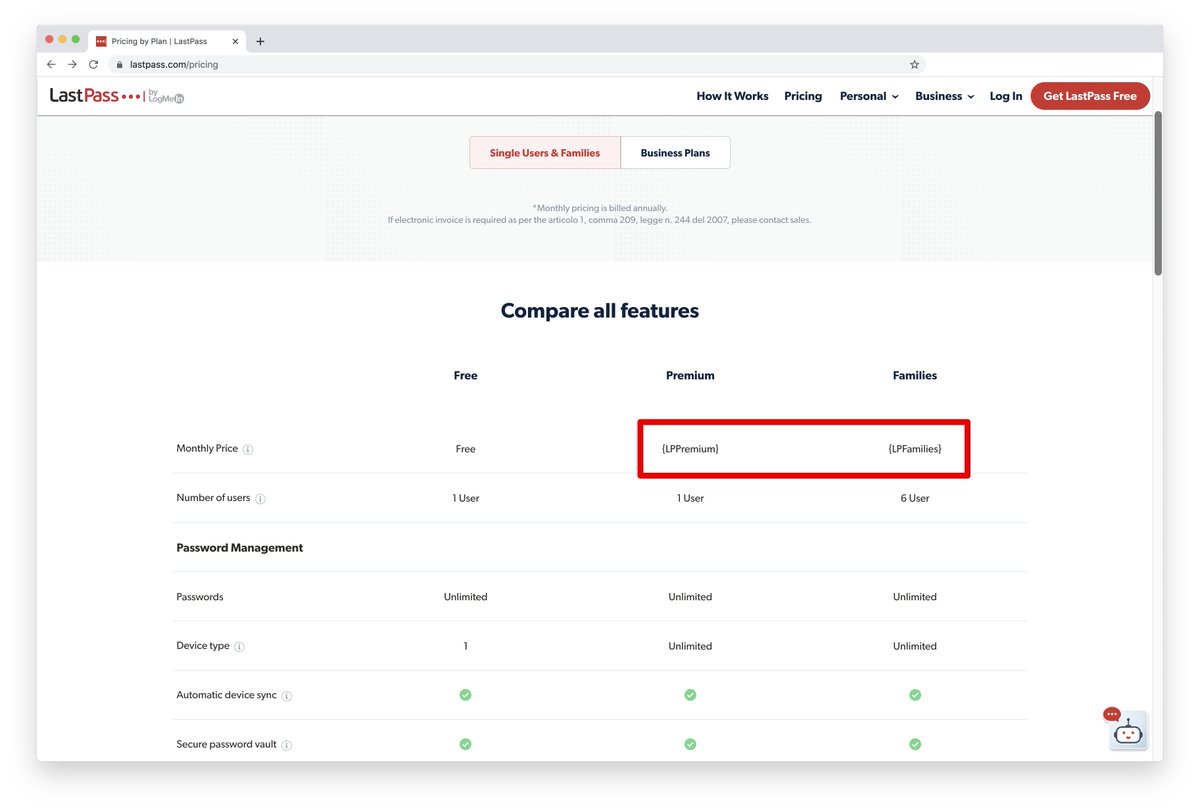
@LastPass hey, you folks testing out some dynamic pricing? 😅
Seems broken on my end.
⟳ 0
♡ 0
Replying to @nacho_rtw
⟳ 0
♡ 1
Replying to @samuelstancl
⟳ 0
♡ 1
Replying to @mijustin
“Many devs make bad customers.”
Every group has bad customers.
I’m not convinced that devs are over-represented here.
(So far, I’ve found devs to be some of my best customers, the easiest to serve, and the most helpful with feedback)
⟳ 0
♡ 13
Replying to @samuelstancl
@samuelstancl * many people make bad customers in general 😜
I’m not convinced that devs are over represented here.
⟳ 0
♡ 1
Replying to @mijustin
I’ve observed quite a few niches, and I’ve never seen anything as good as the dev market.
- Market size
- Ability to pay
- Easy to reach
- Willingness to pay
The total amount of money being spent in the sector is massive.
Lots of opportunity on both the Prosumer and B2B side.
⟳ 0
♡ 19
Replying to @samuelstancl
@samuelstancl I’ve observed quite a few niches, and I’ve never seen anything as good as the dev market.
- Market size
- Ability to pay
- Easy to reach
- Willingness to pay
The total amount of money being spent in the sector is massive.
Lots of opportunity on both the Prosumer and B2B side.
⟳ 0
♡ 1
Replying to @samuelstancl
@samuelstancl “It’s absolutely not true that they have a low pain tolerance and would rather pay.”
The sales numbers I’ve seen for Tailwind, Laravel Forge, Sidekiq, Alpine/Livewire, Tuple would disagree with you. 😉
⟳ 0
♡ 0
Replying to @autiomaa
@autiomaa Are salaries getting smaller?
Do you have a source for that? I’d like to take a look.
⟳ 0
♡ 0
Replying to @mijustin
Anecdotally, I suspect that devs are funding a big portion of the creator economy (Patreon, private podcasts, Substacks, GitHub sponsors).
They have a lot of disposable income, and philosophically like the idea of supporting indie makers.
(Any thoughts on this
@ljin18?)
⟳ 0
♡ 13
Replying to @autiomaa
@autiomaa That’s a slightly different issue.
I think most white collar jobs are like this though, no?
⟳ 0
♡ 1
Replying to @mijustin
Still opportunities to build profitable job boards for certain frameworks (although, it helps if you’re the one who owns the framework).
For example, there is already a lot of unmet demand for
@tailwindcss web devs who are good at design + customizing Tailwind components.
https://twitter.com/spolsky_co/status/1366100805842001921
⟳ 0
♡ 2
Replying to @mijustin
Also, today’s devs aren’t the same people who lived through the tech bubble crash of the early 2000s.
The demand for devs is going to continue to accelerate. Salaries at FAANG companies are $350k-$500k.
The incentives are there for individual devs (and companies) to level up.
⟳ 0
♡ 9
Replying to @mijustin
Contrary to popular belief, many devs (especially dev managers!) have a low pain tolerance and would much rather pay someone to make things easier, faster, less stressful, etc...
https://twitter.com/joshuaanderton/status/1214345595567009793
⟳ 0
♡ 11
Replying to @mijustin
1. Content marketing is particularly effective (tutorials, technical posts, quick tips)
2. Ability to reach devs through Twitter, Twitch, YouTube, HN,
http://Dev.to, etc
3. Lots of online communities (Slack, Discord, HN, Reddit, forums)
4. Increased WoM frequency
https://twitter.com/xakpc/status/1366094293954396162
⟳ 0
♡ 15
Replying to @jayacunzo
@jayacunzo We should chat about this. I have a slightly different view. 😉
⟳ 0
♡ 0
Replying to @mijustin
The “software developer” market has other advantages:
1. Many efficient, low-cost distribution channels.
2. Lots of existing networks (Twitter) and communities (HN,
http://Dev.to, Reddit).
3. High salaries create knock-on effects that effect pricing + demand.
⟳ 0
♡ 17