Tweets

Justin Jackson
Justin Jackson@mijustin
@SweatingCommas Lol. I'm sure Plato's Unified Theory of Santa Claus is somewhere in here.
⟳ 0 ♡ 0
Justin Jackson
Justin Jackson@mijustin
Replying to @mijustin
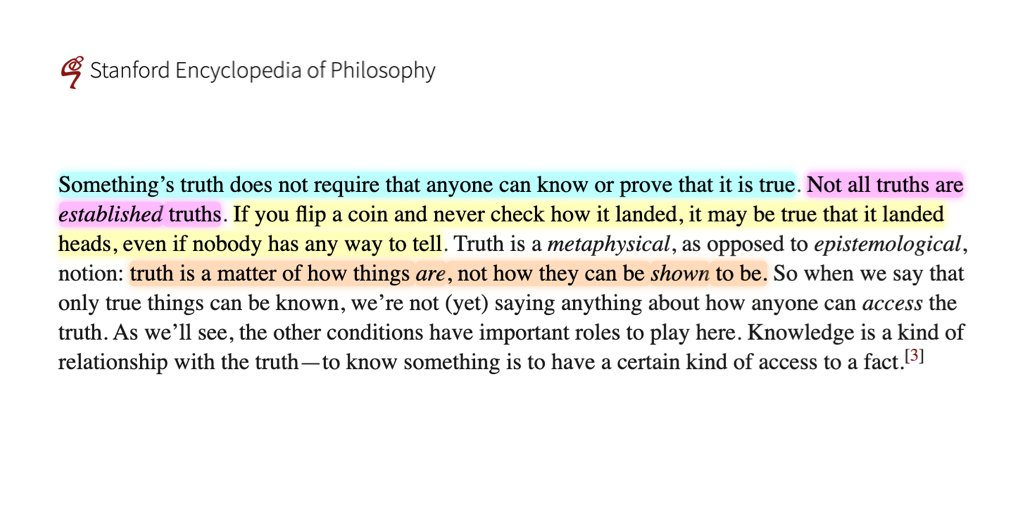
(I definitely can't grok everything on Stanford's "Analysis of Knowledge" piece; but this section on truth seems like an important distinction to keep in mind)
⟳ 0 ♡ 1
Justin Jackson
Justin Jackson@mijustin
"Not all truths are established truths. If you flip a coin and never check how it landed, it may be true that it landed heads, even if nobody has any way to tell. Truth is a matter of how things are, not how they can be shown to be."

https://plato.stanford.edu/entries/knowledge-analysis/
⟳ 0 ♡ 5
Justin Jackson
Justin Jackson@mijustin
Replying to @gilesvangruisen
@gilesvangruisen @earthlingworks Yes.

Does that mean we can, in turn, give people an understanding of the world that will ameliorate their chances?

For example, market-driven demand has (thus far) been a fairly constant attribute of capitalism. Helping folks understand that earlier; is that helpful?
⟳ 0 ♡ 2
Justin Jackson
Justin Jackson@mijustin
Replying to @gilesvangruisen
@gilesvangruisen @earthlingworks Broadly that feels right.

But there are iterative/cumulative effects of work & luck that make the story a lot more interesting.

Even "making the right choice" is a mixture of luck, skill, experience, knowledge, etc.

Every new variable introduces a myriad of possible outcomes.
⟳ 0 ♡ 2
Justin Jackson
Justin Jackson@mijustin
Replying to @earthlingworks
@earthlingworks Success seems multifaceted, cumulative; making it difficult to describe in a linear way.

For example, "knowledge" is important.

But sometimes you seek the wrong knowledge. Sometimes knowledge finds you. Knowledge often compounds; but an external var can disrupt what you know.
⟳ 0 ♡ 0
Justin Jackson
Justin Jackson@mijustin
Replying to @earthlingworks
@earthlingworks These options feel too binary, and denotes a spectrum where "hard work" is on one side, and "luck" is on the other.

"Hard work" as a blunt measurement isn't nuanced enough. (Coal miners work harder than I ever will)

Lots of other vars: knowledge, experience, frequency/exposure
⟳ 0 ♡ 1
Justin Jackson
Justin Jackson@mijustin
Replying to @pbmarcano
@pbmarcano Before we commit to a wholesale, worldwide shift to our economic system, we should ensure we're not committing ourselves untenable energy demands (climate-wise).

Using greener energy sources for crypto also suffers from the "induced demand" problem.

https://en.wikipedia.org/wiki/Induced_demand
⟳ 1 ♡ 1
Justin Jackson
Justin Jackson@mijustin
Replying to @Shpigford
@Shpigford @earthlingworks @mariordev @valsopi It’s interesting to me that we (as individuals) seem to coalesce around the same 3-4 elements (as opposed to other things), which makes it feel less related to our “personal feelings/opinions” and (perhaps?) more culturally or evolutionarily based?
⟳ 0 ♡ 0
Justin Jackson
Justin Jackson@mijustin
Say what you will about @SamHarrisOrg, but his critique here is on point.

Tech humanism is full of hubris; imagining utopian solutions for the world, but disconnected from consequences if it goes wrong.

"If it all unravels, they can hide in their New Zealand compound."
⟳ 1 ♡ 20
Justin Jackson
Justin Jackson@mijustin
@mariordev @earthlingworks @valsopi I think "working smart" misses an important nuance:

In business, no matter how "hard" or "smart" you work, it's the momentum in a given market that will ultimately determine your trajectory.

Recognizing the pull of a market often means being exposed to/immersed in it.
⟳ 0 ♡ 1
Justin Jackson
Justin Jackson@mijustin
Replying to @earthlingworks
@earthlingworks @valsopi I haven't read this book, so I'm not sure if the lesson being described is completely transferable to business, but here's what I mean:

The more you immerse yourself in something, the more things tend to happen naturally. Opportunities emerge organically out of your experience.
⟳ 0 ♡ 2
Justin Jackson
Justin Jackson@mijustin
Replying to @earthlingworks
@earthlingworks @valsopi To me, this excerpt is an example of immersing yourself in practice and principles.

Practice: being in motion, learning intuitively what to do.

Principles: playing the game (business) by its underlying structure/rules (market-driven).
⟳ 0 ♡ 1
Justin Jackson
Justin Jackson@mijustin
Replying to @mijustin
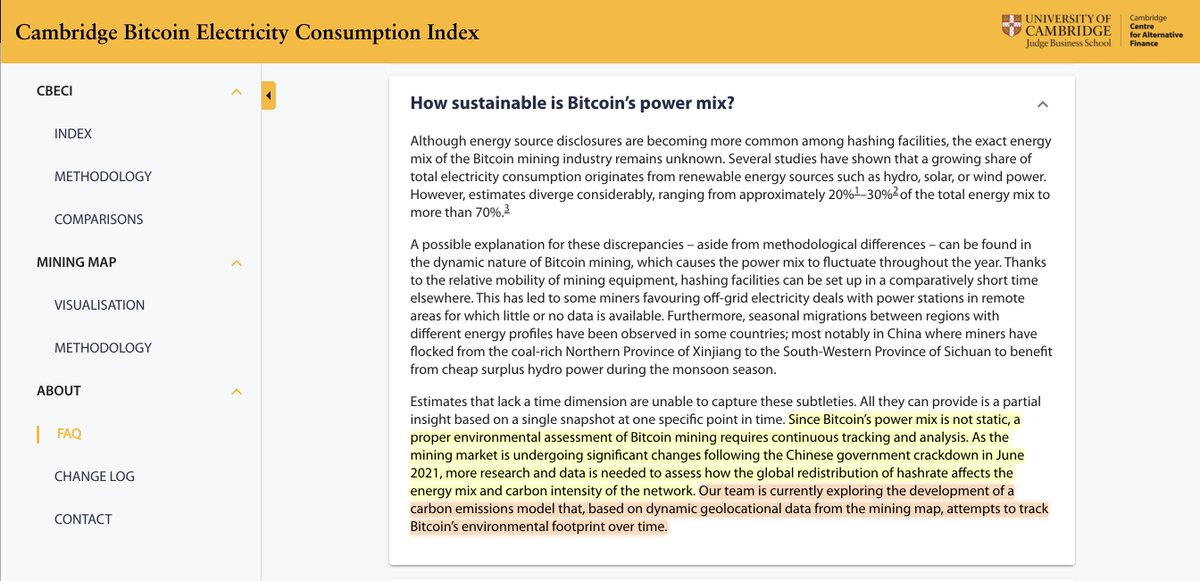
@pbmarcano The conclusions that Lyn is deriving from the Cambridge study aren't accurate.

They identify the limitations of their data here:

"More research and data is needed to assess how the global redistribution of hashrate affects the energy mix and carbon intensity of the network."
⟳ 0 ♡ 0
Justin Jackson
Justin Jackson@mijustin
Replying to @pbmarcano
@pbmarcano Sorry, but this isn't solid science.

Lyn is an investment advisor (and she's using old arguments)

The IEA has had numerous criticisms from the scientific community (#Criticism)" rel="noopener noreferrer">https://en.wikipedia.org/wiki/International_Energy_Agency#Criticism)

Science is the process of experts rigorously vetting data, assumptions, and theses.

⟳ 0 ♡ 0
Justin Jackson
Justin Jackson@mijustin
RT
RT @lovevalgeisler: 3 years later and we’re still here. I invite you to read this whole thread. We center sexual assault and reproduction o…
⟳ 0 ♡ 0
Justin Jackson
Justin Jackson@mijustin
Replying to @kylefox
@kylefox @mckinneycraig I’m trying to listen to it now.

This… does not feel like an intelligible vision of the future to me. Lots of “word salad;” incoherent rationally.

(At least, for me)
⟳ 0 ♡ 4
Justin Jackson
Justin Jackson@mijustin
RT
RT @mijustin: To paraphrase @kylefox’s whole take:

“Crypto could be big, but that remains to be seen. Either way, we’re probably at the “h…
⟳ 0 ♡ 0
Justin Jackson
Justin Jackson@mijustin
@brhea @kylefox Still some things holding me back: the environmental cost is the biggest one.

Until I better understand how that works, I can’t commit.
⟳ 0 ♡ 2
Justin Jackson
Justin Jackson@mijustin
Replying to @mijustin
To paraphrase @kylefox’s whole take:

“Crypto could be big, but that remains to be seen. Either way, we’re probably at the “http://pets.com peak” of the hype cycle. Once this wave crashes, we’ll see if anything useful & enduring emerges.”

☝️ that’s a refreshing tone
⟳ 4 ♡ 33
Justin Jackson
Justin Jackson@mijustin
Replying to @ow
@ow @kylefox Yup. That’s why I went to Kyle in the DMs.

His is take was refreshing:

“Crypto could be big, but that remains to be seen. Either way, we’re probably at the “http://pets.com peak” of the hype cycle. Once this wave crashes, we’ll see what emerges.”
⟳ 0 ♡ 1
Justin Jackson
Justin Jackson@mijustin
Replying to @mijustin
"Tech (obviously) eventually turned into a Real Thing™, (due to a number of factors).

I think it remains to be seen whether or not crypto can do that – but there's lots of interesting tech, and lots of real problems that it could(?) solve."
⟳ 0 ♡ 4
Justin Jackson
Justin Jackson@mijustin
Replying to @mijustin
"The dotcom bubble was driven by suits who had nothing to offer except hype, and they oversold everyone (including themselves).

But the hackers didn’t really care. The bubble burst, the grifters skipped town, and the hackers kept hacking.

☝️ It could be the same with crypto."
⟳ 0 ♡ 24
Justin Jackson
Justin Jackson@mijustin
Replying to @mijustin
"A lot of the dotcom boom & bust was excitement around all the things that could theoretically be possible with the internet.

There was a lot of (irrational?) optimism baked into the valuations of companies at the time because people had these wild fantasies of what was to come"
⟳ 0 ♡ 10
Justin Jackson
Justin Jackson@mijustin
Ok, @kylefox and I were chatting in the DMs, and his crypto analogy makes sense to me.

"I don’t think we’re in the 'BBS days' of crypto; I think we’re in the 'http://pets.com days' of crypto."

👉
⟳ 0 ♡ 38
Justin Jackson
Justin Jackson@mijustin
Replying to @danielzarick
@DanielZarick I'm just curious about all this.

Why do you think crypto is getting more hype/investment than other emerging tech with potential?

(Quantum computing, large-scale AR/VR, carbon capture, etc.)
⟳ 0 ♡ 0
Justin Jackson
Justin Jackson@mijustin
Replying to @einarvollset
@einarvollset @ianlandsman @cdixon Ok. I dig this example (you're starting to incrementally sway me, haha).

But how come crypto is getting more hype/investment than other emerging tech with potential?

(Quantum computing, large-scale AR/VR, carbon capture, etc.)
⟳ 0 ♡ 1
Justin Jackson
Justin Jackson@mijustin
Replying to @danielzarick
@DanielZarick But that’s the thing. It wasn’t actually that big of a jump at the time.

“It’s like listening to the radio, but I can customize the shows I listen to.”

I don’t see “small iterative jumps” like this with crypto.

Instead, I’m getting a lot of “giant world-changing” evangelism.
⟳ 0 ♡ 3
Justin Jackson
Justin Jackson@mijustin
Replying to @zherring
@zherring You’re not helping me see it. Lol.

In the early in 1990 (before the web) I had an email address and so my grandpa and aunts got an email address to so we could write.

What the widespread use-cases?
⟳ 0 ♡ 2
Justin Jackson
Justin Jackson@mijustin
Replying to @headphoneDas
@itsssDas - don’t care about savings yields; making good return on investments
- wired money yesterday through @BankMercury – fast and free
- recurring revenue in SaaS and other subscription-based models already works?
⟳ 0 ♡ 2
Justin Jackson
Justin Jackson@mijustin
Replying to @mijustin
Kudos to the crypto PR department though:

Cartoon apes is way better than laser eyes. 👍
⟳ 0 ♡ 48
Justin Jackson
Justin Jackson@mijustin
Replying to @mijustin
Do you know normal people using crypto tech?

(aside from buying it as investment on Robinhood, Wealthsimple, etc)

What are they using it for?

I see very little real-world usage outside of the crypto bubble.

Curious if I’m just not seeing it?
⟳ 1 ♡ 47
Justin Jackson
Justin Jackson@mijustin
Replying to @einarvollset
@einarvollset @cdixon Do you know normal people using crypto tech?

What are they using it for?

I see very little real-world usage outside of the crypto bubble.
⟳ 0 ♡ 0
Justin Jackson
Justin Jackson@mijustin
Replying to @ianlandsman
@ianlandsman @einarvollset @cdixon Ian, what’s going to drive adoption?

I don’t see a path right now for widespread usage.

It’s still incredibly niche (besides folks buying it as an investment vehicle - often in investment accounts where they can’t “use” it)
⟳ 0 ♡ 0
Justin Jackson
Justin Jackson@mijustin
Replying to @einarvollset
@einarvollset @cdixon The difference is that in 1997, 102 million people had a computer. Only 18% of people had the internet, but that translated into 36 millions subscribers for AOL that year.

I don’t know a lot of regular households using crypto right now (besides buying it like they buy stocks)
⟳ 0 ♡ 0
Justin Jackson
Justin Jackson@mijustin
Replying to @einarvollset
@einarvollset @cdixon You’re misunderstanding me.

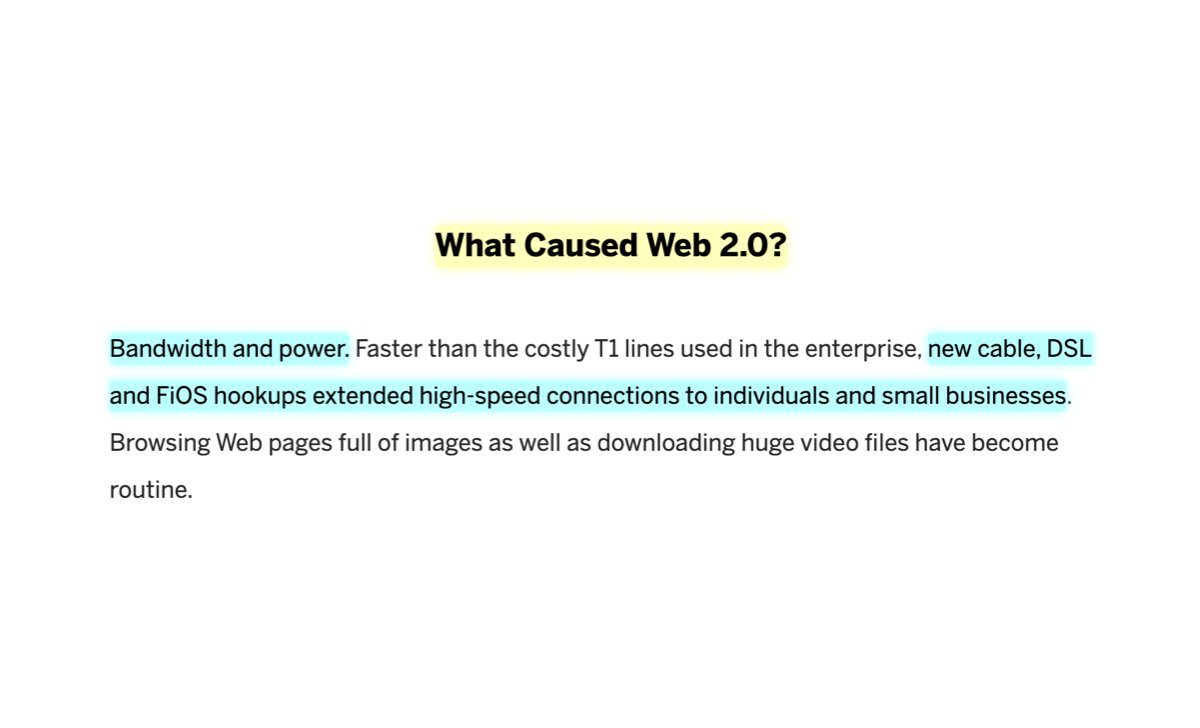
*Something* has to drive adoption. For Web 2.0, it was widely available broadband (largely funded by the government).

I’m not saying govt involvement is always necessary to drive adoption… but it often helps; we’re seeing the same with electric cars
⟳ 0 ♡ 0
Justin Jackson
Justin Jackson@mijustin
Replying to @einarvollset
@einarvollset @cdixon Similar to what the interstate provided for the auto industry.

Government funding and programs made widespread broadband a reality and paved the way for 2.0.

#Government_policy_and_programs" rel="noopener noreferrer">https://en.wikipedia.org/wiki/Internet_in_the_United_States#Government_policy_and_programs

Web 2.0 occurred because of the proliferation of broadband in America.

https://www.pcmag.com/encyclopedia/term/web-20
⟳ 0 ♡ 0
Justin Jackson
Justin Jackson@mijustin
Replying to @einarvollset
@einarvollset @cdixon Traditionally, it's govt investment/subsidies that "lead the change."

They invest before there is widespread usage, and help create the infrastructure that facilitates adoption.

(network infrastructure, interstate hwy for cars, subsidies for electric car manufacturers)
⟳ 0 ♡ 1
Justin Jackson
Justin Jackson@mijustin
Replying to @efreyreg
@efreyreg @RphGrc Thinking from a consumer’s perspective: will they see “gas fee” as substantially different than “management fee?”
⟳ 0 ♡ 6
Justin Jackson
Justin Jackson@mijustin
Replying to @zherring
@zherring @wslyvh @cdixon Traditionally, it's govt investment/subsidies that "lead the change." They invest before there is traction, and help create the infrastructure that undergirds widespread adoption.

(internet, highways for cars, subsidies for electric car manufacturers)
⟳ 0 ♡ 0
Justin Jackson
Justin Jackson@mijustin
Replying to @mijustin
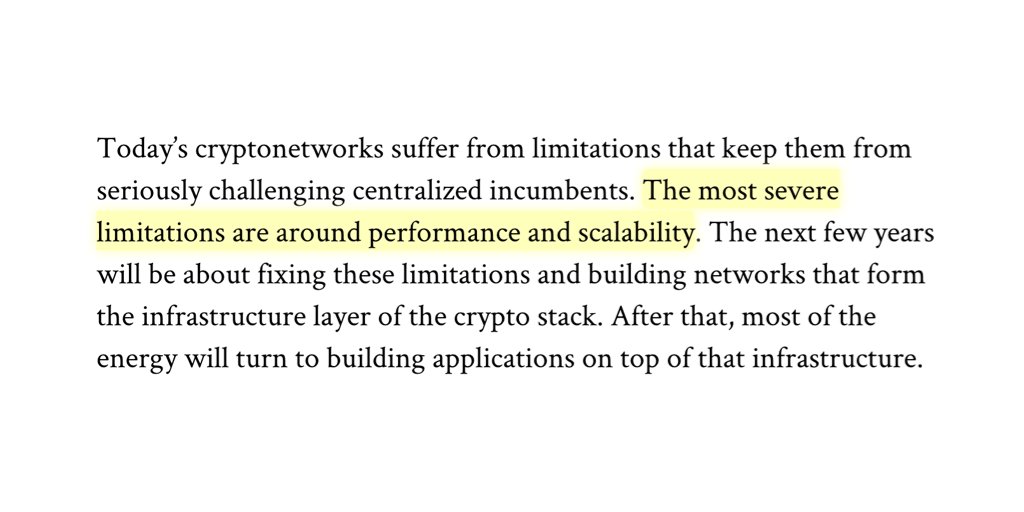
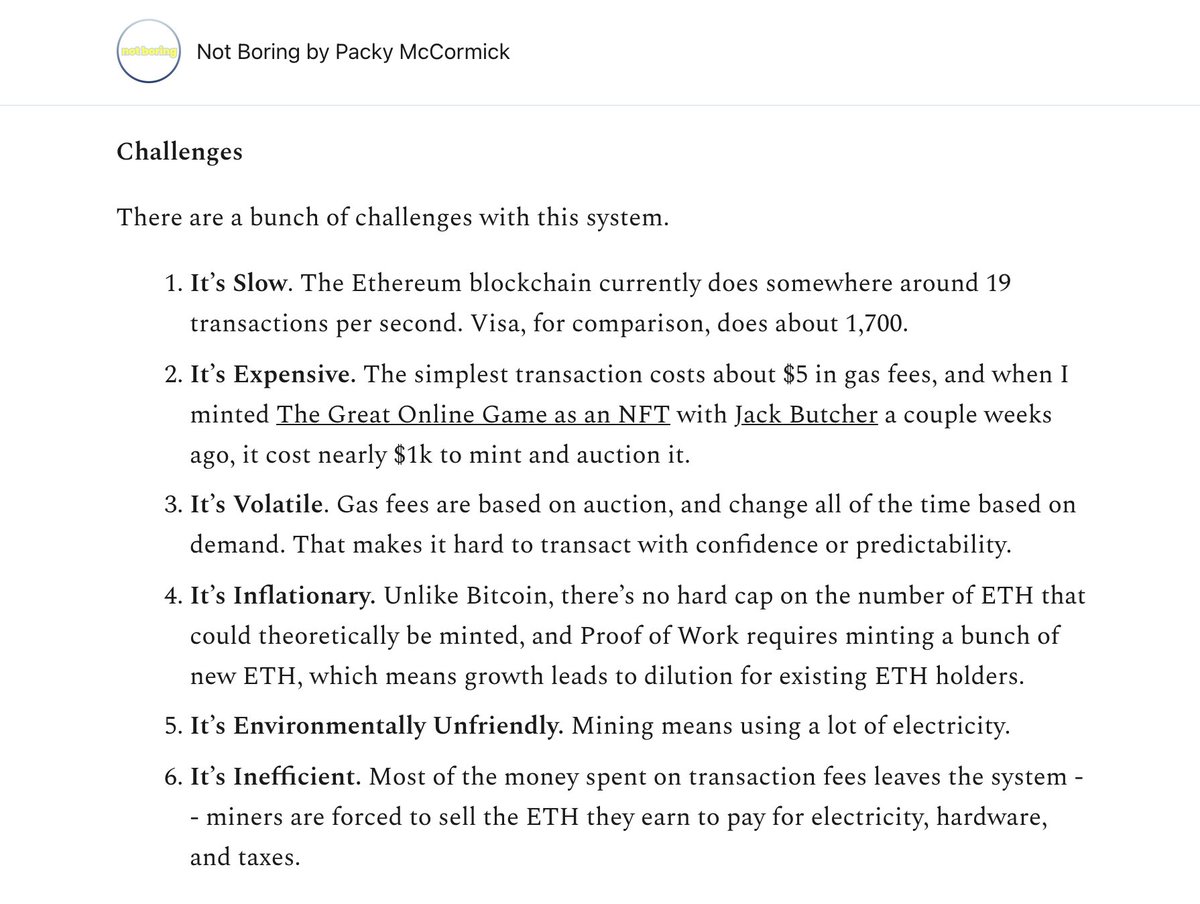
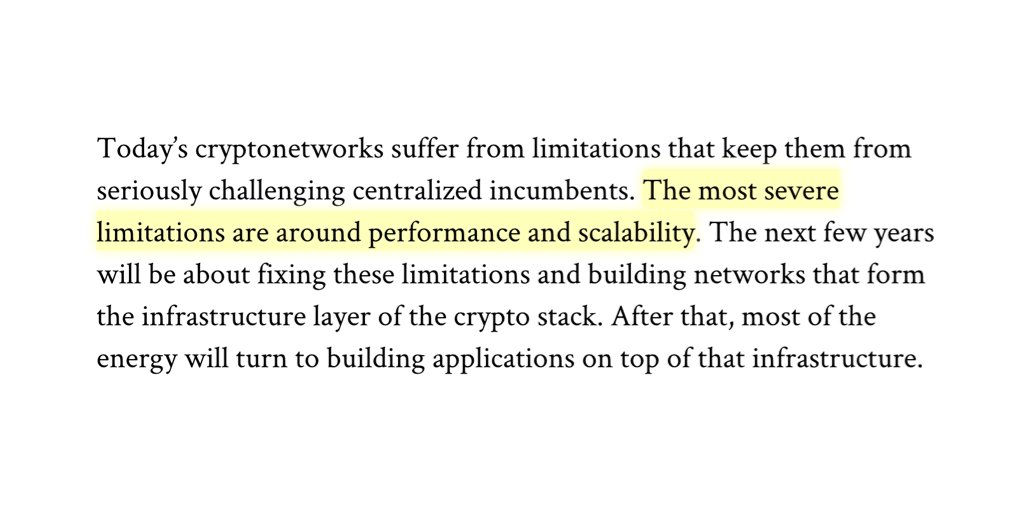
.@cdixon identifies a few of web3's constraints, but misses the biggest one: adoption.

Without widespread adoption (by "regular" folks), the promise of web3 won't work.

Government funding of internet infrastructure stoked web 1.0/2.0 adoption. How will that happen with web3?
⟳ 0 ♡ 25
Justin Jackson
Justin Jackson@mijustin
Replying to @zherring
@zherring Not saying that. Just saying that so far, open-source/decentralized alternatives haven't gained widespread adoption.

Even the most successful versions of open-source projects (WordPress) have a centralized/for-profit entity behind them.
⟳ 0 ♡ 0
Justin Jackson
Justin Jackson@mijustin
Replying to @zherring
@zherring @wslyvh @cdixon Yes! The big problem with web 1.0 and 2.0 was "access to the internet."

Governments invested heavily in infrastructure (especially high-speed internet) which is what, ultimately, made web 2.0 work: widespread internet access meant regular people were online.
⟳ 0 ♡ 0
Justin Jackson
Justin Jackson@mijustin
Replying to @nelsonjoyce
@nelsonjoyce @packyM Yeah. And until this stuff really gets solved... (and we see actual "I have an eth wallet" adoption widespread in the public), I can't see how this will work?
⟳ 1 ♡ 10
Justin Jackson
Justin Jackson@mijustin
Replying to @RphGrc
@RphGrc What's a practical example of that? How will that feature make a regular person's life better?
⟳ 0 ♡ 11
Justin Jackson
Justin Jackson@mijustin
Replying to @wslyvh
@wslyvh .@cdixon identifies a few limitations, but misses the most potent constraint: adoption.

Without widespread adoption (by "regular" folks), the promise of web3 won't work.

Government funding of internet infrastructure stoked web 1.0/2.0 adoption. How will that happen with web3?
⟳ 0 ♡ 5
Justin Jackson
Justin Jackson@mijustin
Replying to @mijustin
Also: do decentralized apps work, at scale, in practice?

Example: Twitter already has a decentralized competitor (Mastodon) that hasn't gained traction.

Is there something about traditional apps/biz models that make them succeed despite open-source/decentralized alternatives?
⟳ 0 ♡ 28
Justin Jackson
Justin Jackson@mijustin
Replying to @falicon
@falicon Ok, but what does that look like, practically?

For example, Twitter already has a decentralized competitor (Mastodon) that hasn't gained traction.

Is there something about traditional (centralized) apps that make them more compelling/attractive for widespread use?
⟳ 0 ♡ 9
Justin Jackson
Justin Jackson@mijustin
Replying to @CupOJoseph
@CupOJoseph Are there some examples of this happening already?

If these are community-run; will "founders" be a thing of the past? Who will lead these new apps?

Will funding be a thing of the past? If not; why would VCs fund apps like this?
⟳ 0 ♡ 11
Justin Jackson
Justin Jackson@mijustin
Replying to @MrRetireEarly
@yarobagriy I don't understand what you mean.

As in: online communities (like Twitter, MegaMaker, etc) will now be owned equally by users?

How will that work?
⟳ 0 ♡ 9
Justin Jackson
Justin Jackson@mijustin
I really don't get the hype around web3.

(I was around for the advent of the web and and "web 2.0" and was excited about both)

If you're a web3 believer, what's compelling about it for you?
⟳ 12 ♡ 186
Justin Jackson
Justin Jackson@mijustin
Replying to @arithisandthat
@arithisandthat Happy birthday! 🥳

My advice to my 29 year-old self: keep meeting people outside your bubble; folks who are working on interesting things. Learn from them! Let them show you what’s possible. ✨
⟳ 0 ♡ 8
Justin Jackson
Justin Jackson@mijustin
Replying to @mijustin
👩‍🔬 This is a key tenet of science as well:

"Scientists do sometimes change their minds in the face of new evidence, but this is a strength of science, not a weakness, that scientists continue to learn and to be open to new ways of thinking about old problems."
@NaomiOreskes
⟳ 1 ♡ 3
Justin Jackson
Justin Jackson@mijustin
If you're planning on having a picnic, but it rains, you adjust your plans. 🌧️

Likewise, it's necessary for leaders to adjust their plans when they get new information. ⚡

Plans aren't static; variables change. Responding to evolving circumstances is part of life. 🌀
⟳ 1 ♡ 14
Justin Jackson
Justin Jackson@mijustin
@staydecent Yes. Because things change.

Most countries had a reopening plan, but the Delta variant has changed all of that.

Science isn't "static." Viruses evolve. Variables change.

We can't expect plans laid in May to "stay the same;" our response has to evolve (because covid is).
⟳ 0 ♡ 0
Justin Jackson
Justin Jackson@mijustin
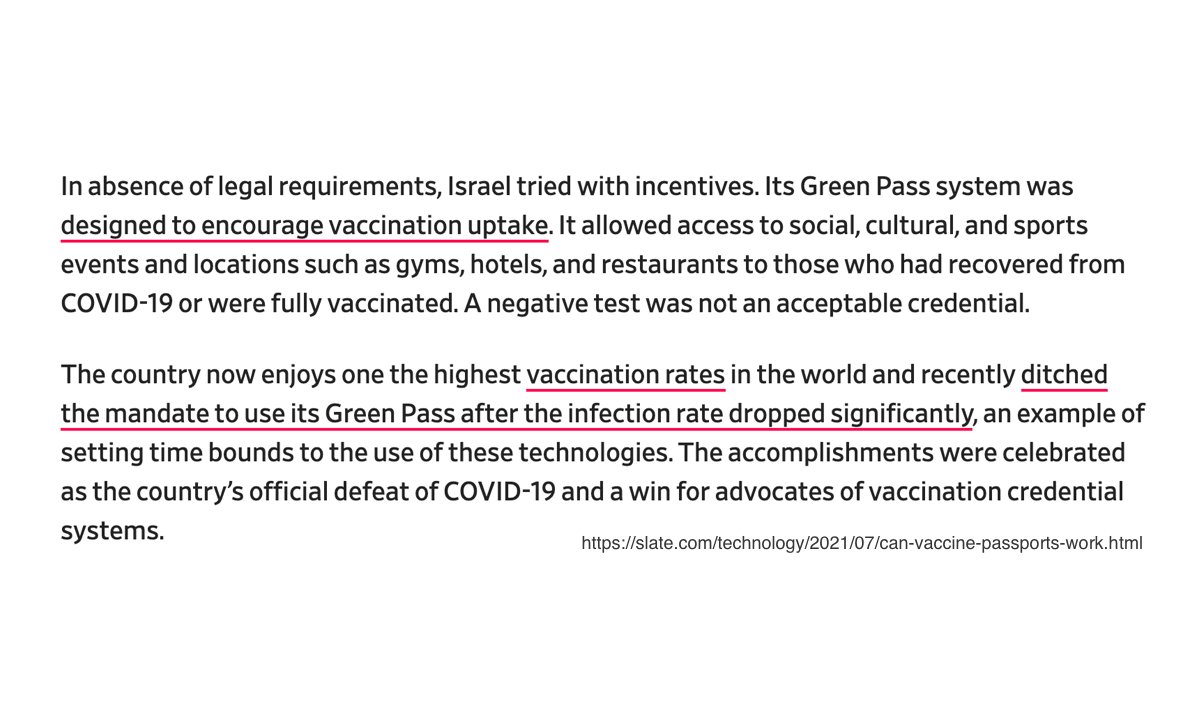
@staydecent It's still voluntary; if folks want to go to nightclubs, sporting events, etc, they can get the passport.

Israel's initial implementation (March - May) helped reach high vaccination rates.

(They've only recently had to reinstate these measures because of Delta spikes)
⟳ 0 ♡ 0
Justin Jackson
Justin Jackson@mijustin
Replying to @KevinHicksSW
@KevinHicksSW Interesting! Was the rationale the same?

“It’s just not worth tracking hundreds of small expenses/receipts like this.”

(The writeoffs aren’t worth it)
⟳ 0 ♡ 1
Justin Jackson
Justin Jackson@mijustin
@staydecent One thing about that video:

It's ok for public officials and scientists to change their mind. When they're presented with new data, new variants, etc... we need them to change their minds!

There's a reason that many global health authorities are considering passports right now.
⟳ 0 ♡ 0
Justin Jackson
Justin Jackson@mijustin
Replying to @catthekin
@catthekin Every year, I realize this more and more.

🤦‍♂️ "Why am I categorizing this $3.83 expense? And why do I have so many other transactions like it?"
⟳ 0 ♡ 0
Justin Jackson
Justin Jackson@mijustin
Replying to @mijustin
A practical example: I used to pay for business lunches / coffee meetings all the time with my business visa.

But... I realized these small transactions end up costing me way more in accounting costs (uploading the receipt, categorizing, reconciling).

I minimize those now.
⟳ 0 ♡ 8
Justin Jackson
Justin Jackson@mijustin
Replying to @mijustin
Fewer receipts, bank statements, expense reports, and transactions means way less work for you and your accountant.

That $5 receipt you kept can end up costing you way more in bookkeeping time / reconciliation.
⟳ 0 ♡ 12
Justin Jackson
Justin Jackson@mijustin
Doing my business' year-end with my accountant.

Big realization:

"To simplify your accounting, minimize the number of transactions!"

✅ If you can pay for it annually, do it.
✅ Get your Stripe payments once a month/quarterly.
✅ Minimize # of payments.
✅ Use fewer accounts.
⟳ 2 ♡ 75
Justin Jackson
Justin Jackson@mijustin
@staydecent I wonder if it's a question of resources?

Large-scale testing requires a ton of public health resources (clinics, staff, tests, labs).
⟳ 0 ♡ 0